A physicist in love with biology

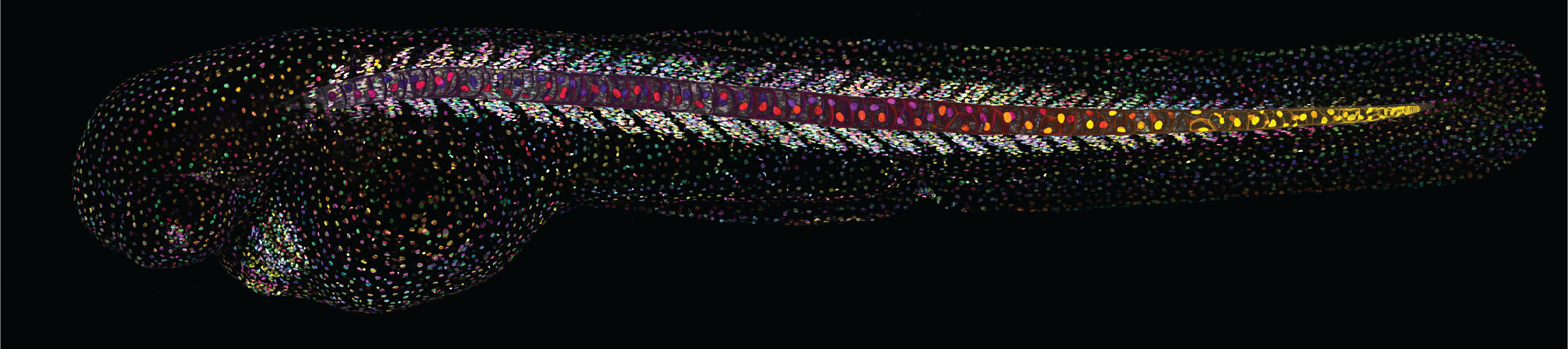
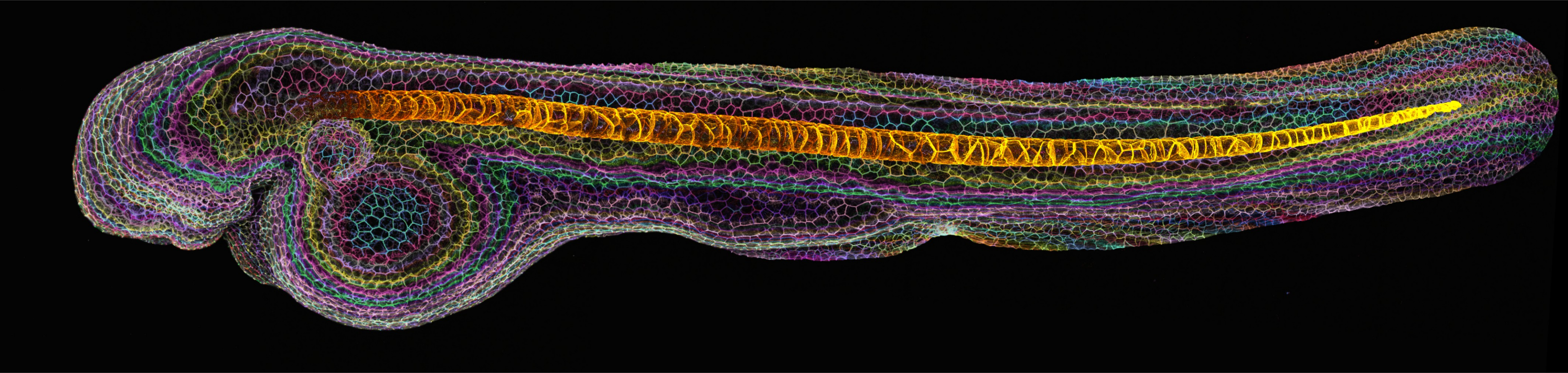
Microscopy image of the zebrafish notochord, 2022 Microscopy image of the zebrafish notochord, 2023

Credit: PZ · Best Microscopy Award 2022 & 2023

Research

As a biophysicist, I'm interested in how physical forces shape cellular and developmental processes.

Notochord mechanics

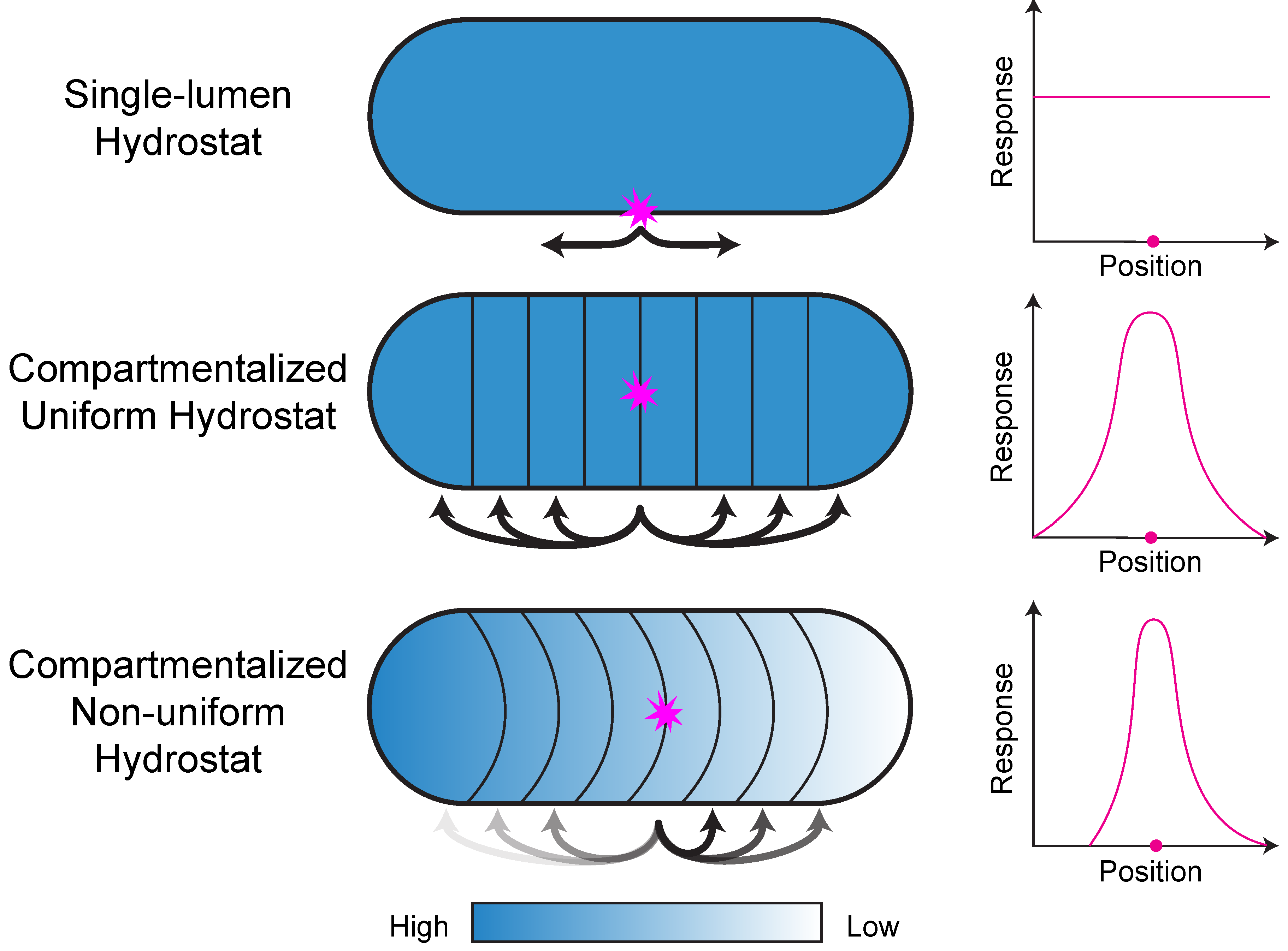
The vertebrate notochord, the developing precursor to the spine, must simultaneously stiffen and elongate the embryonic body axis while accommodating the localized loads imposed by developing vertebrae. Combining live imaging, two-photon laser ablation, and fluid-driven theoretical modeling in zebrafish, our work shows that the notochord operates as a "compartmentalized non-uniform hydrostat" whose fluid is partitioned across cells carrying different pressures, forming a graded landscape that reorganizes across development. This architecture reveals how a tissue can be globally pressurized while permitting mechanical responses to remain locally confined, a principle that extends beyond the notochord to many compartmentalized biological systems.

Diagram comparing single-lumen, compartmentalized uniform, and compartmentalized non-uniform hydrostat models of the notochord, each with a corresponding response-vs-position graph

Spindle mechanics

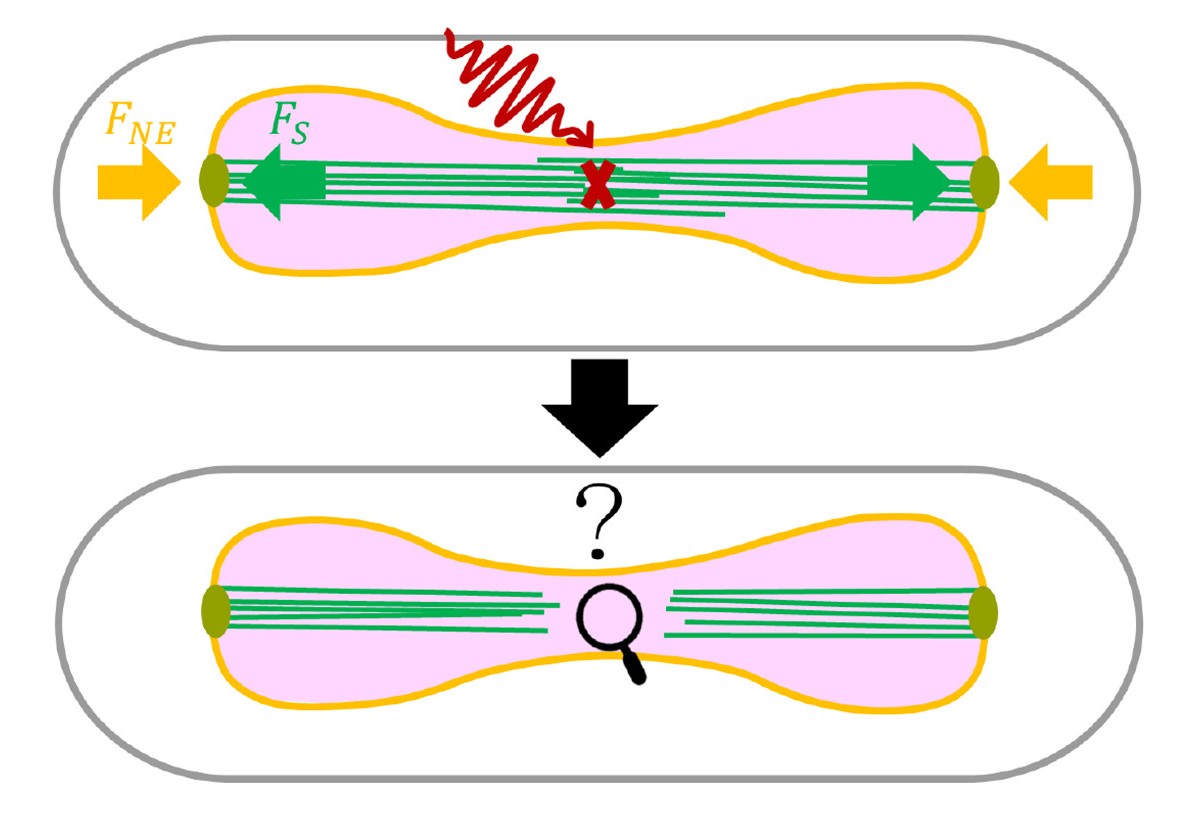
The mitotic spindle pulls duplicated chromosomes apart using microtubules and motor proteins, but how it maintains and re-establishes force balance under mechanical perturbation was unclear. Using laser ablation to sever spindles in fission yeast at various stages of mitosis, our work shows that the severed poles collapse back toward each other, powered by the minus-end-directed motors dynein (Dhc1) and kinesin-14 (Klp2), rather than by passive viscoelastic relaxation of the nuclear envelope as previously assumed. This active, motor-driven response lets the spindle rescue its geometry and resume elongation after damage, showing that molecular motors, not just passive mechanics, actively defend the spindle's structural integrity.

Diagram of the mitotic spindle before and after laser ablation, showing motor-driven forces reconnecting the severed spindle poles

Let's talk science.

Email